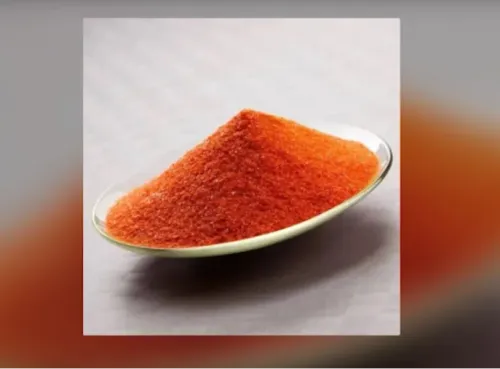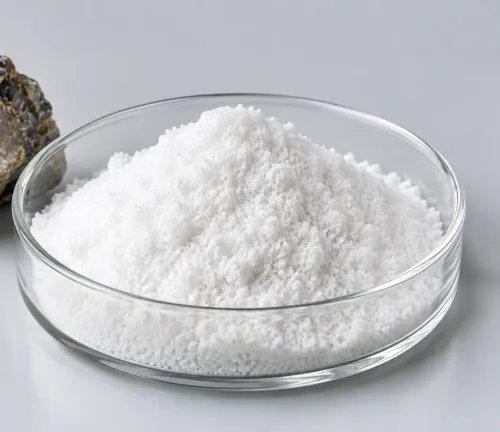
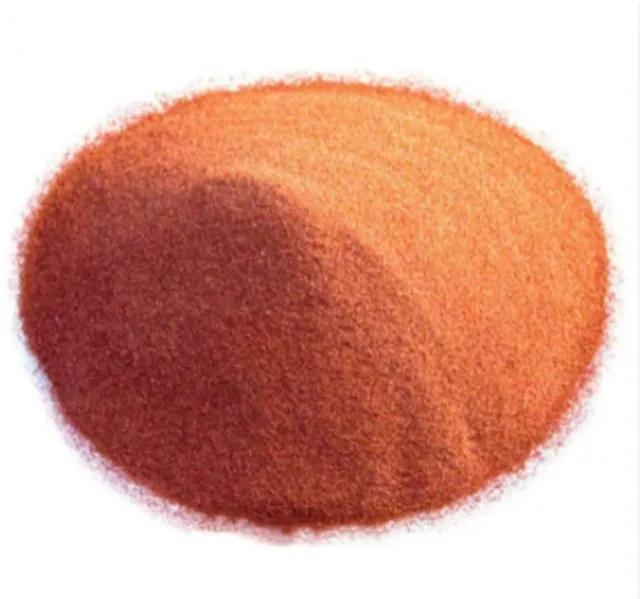
Copper Powder Industrial Grade is used wherever manufacturers require the electrical, thermal, metallurgical or colour-related properties of copper in a particulate form. Applications range from powder metallurgy and friction materials to conductive products and specialised coatings.
Not every copper powder performs in the same way. Particle shape, particle-size distribution, apparent density, oxygen content and purity influence how the material flows, compacts, disperses and bonds. For procurement teams in Vadodara’s engineering and chemical manufacturing sectors, these parameters are more meaningful than product appearance alone.
How Is Copper Powder Produced?
Copper powder may be manufactured through atomisation, electrolytic deposition, chemical reduction or mechanical processing. Each method can create a different particle structure.
Atomised powders are often relatively rounded or irregular, depending on the production conditions. They may offer useful flow characteristics for automated handling.
Electrolytic copper powder commonly has a dendritic or branched particle shape. This structure can provide good green strength and surface contact in selected powder-metallurgy and conductive applications.
Chemically reduced grades may be produced with controlled particle characteristics for particular formulation needs. The appropriate production route depends on the required balance of conductivity, compressibility, surface area and cost.
Why Particle Size Matters
Particle size affects several stages of manufacturing. Fine particles provide a larger surface area and may disperse effectively, but they can be dusty, more reactive and harder to handle. Coarser particles may flow more easily but may not deliver the same surface contact or finish.
Buyers should examine both the average particle size and the full particle-size distribution. Two powders described by the same mesh value can behave differently if one contains a much wider range of fine and coarse particles.
Important particle-related characteristics include:
- Mesh or micron range
- Particle morphology
- Apparent density
- Flow rate
- Surface area
- Compacting behaviour
- Tendency to agglomerate
Common Industrial Uses
Powder Metallurgy
Copper powder is blended, compacted and sintered to manufacture components with controlled shapes and properties. It may be used alone or combined with other metal powders to achieve specific mechanical, thermal or frictional characteristics.
Conductive Materials
Because copper conducts electricity effectively, suitable powders are used in conductive pastes, compounds and selected coating systems. Performance depends on particle contact, binder compatibility, oxidation control and curing conditions.
Friction Products
Copper powder may be incorporated into certain brake, clutch and friction-material formulations. Its contribution can include heat transfer and modification of friction behaviour. The final formulation must be engineered for its specific operating conditions.
Brazing and Metallurgical Processes
Selected copper powders are used in brazing mixtures and metallurgical products. Particle size, cleanliness and alloy compatibility influence processing and joint quality.
Decorative and Functional Coatings
Copper powder can provide a metallic appearance or functional surface properties in appropriately designed coatings. Formulators must account for oxidation, settling and interactions with resins or other ingredients.
What Should Buyers Check?
Before ordering Copper Powder Industrial Grade, a manufacturer should communicate the end use and assess:
- Copper purity
- Oxygen and moisture levels
- Particle-size distribution
- Particle shape
- Apparent and tap density
- Flow characteristics
- Packaging method
- Batch test documentation
A production trial is especially useful when the powder will be compacted, sintered or dispersed in a resin system.
Kadara Chemicals serves industrial customers requiring chemical and material inputs in Vadodara, Gujarat. For copper powder enquiries, an application-led discussion helps identify whether the buyer needs better flow, finer dispersion, greater compactability or controlled purity.
Copper powder should be stored in sealed containers away from moisture, incompatible materials and ignition risks identified in the safety documentation. Dust generation must be controlled during transfer and mixing. When the specification and handling method are aligned with the process, industrial copper powder can deliver more predictable manufacturing performance.
Keywords